Difficult things:
- Climbing Kilimanjaro
- Calculus
- Playing Beethoven on the piano
- Running a marathon
- Building a model airplane
- Learning a new language
- Med school
- One-handed pushups/difficult yoga pose
- Starting a new job in a new field
If we were going to do one of these things for the first time, we would be terrible at them—perhaps, for a long time. Difficult things take discipline, willpower, dedication, and most of all, lots and lots of time. But, when our hard work manages to push us from awkward amateur to “Hey, I’ve got this!”—the pride and satisfaction that follows is incomparable.
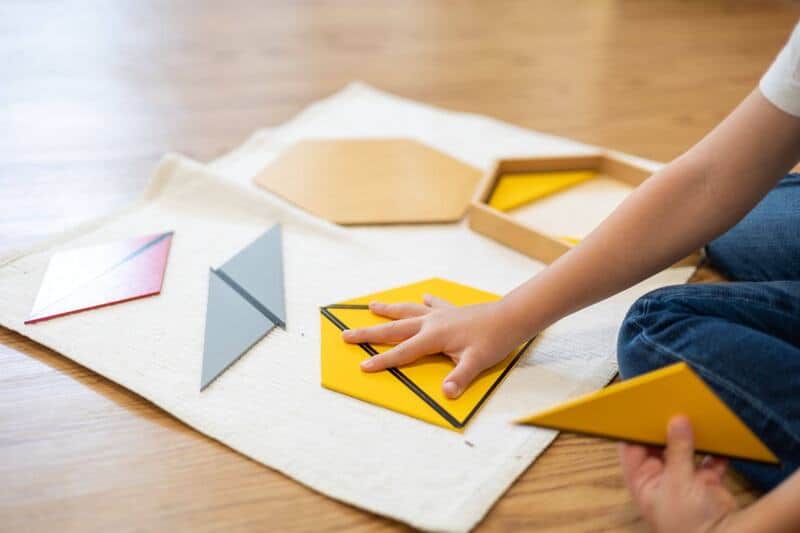
However, as parents, teachers, and caregivers, we often cheat our children of that feeling. We see a child struggling to tie their shoes, and we swoop in with, “Here, honey, let me help you.” We see a child putting Bolivia’s puzzle piece in Venezuela’s spot, and we offer a kind suggestion to try placing it “over here” instead.
My Montessori trainer used to say that by offering unnecessary help, all we are doing is actually robbing the child of their “Aha!” moment. More, we are teaching them that they cannot do difficult things. We are teaching them that they should look to others first, instead of trying themselves. And, we are teaching them that if something is not accomplished within seconds, it is not worth spending the time to figure out.
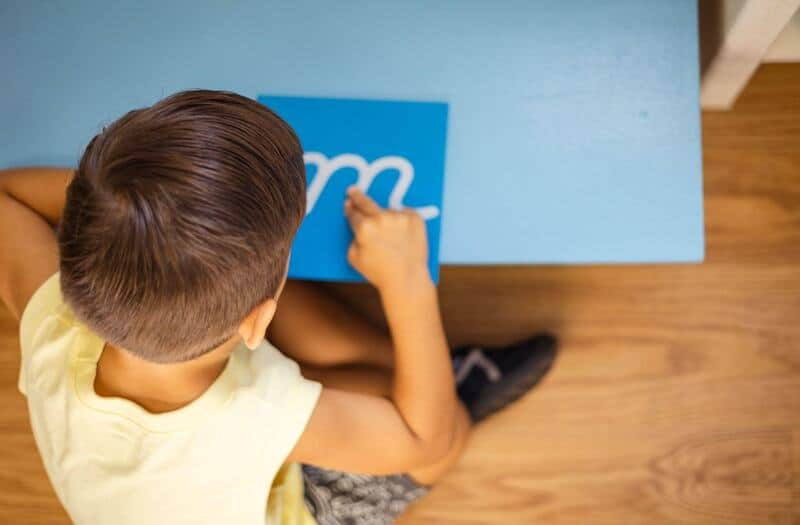
As a Montessorian, I am frequently asked, “Why do you teach cursive instead of print? Isn’t it harder?” There are many reasons for teaching cursive instead of print: there is less confusion between letters; it flows consistently in a left-to-right orientation; it flows more naturally from a young child’s hand. For me, however, a lot of its value lies in the very nature of its challenge.
A child’s all caps print job is usually slapdash, circles and lines residing haphazardly on the page; backward p’s and s’s are common casualties in the rush. Cursive, however, requires the child to pause, think, and concentrate, slowly creating curves and meaning on the page. Although lopsided and awkward at first, cursive usually emerges as beautiful through practice, while print rarely goes through this duckling-to-swan transformation.
We are teaching them to write, an important, necessary skill. But, like most things in Montessori, there is an indirect purpose. We are also preparing the child for the fact that sometimes—often—life is hard. And the only way to conquer it is to muddle through, shakily at first, but with increasing confidence.
So, the next time you see your child concentrating, struggling on some task you could do in two seconds… stop. Instead of rushing in to help, imagine yourself climbing to the top of Kilimanjaro. Imagine yourself running a marathon, graduating med school, playing Beethoven for a concert audience. Imagine yourself doing one-handed pushups while holding a complicated yoga pose, shouting, “Lo hice!” (“I did it!” in Spanish, the new language you just learned). Imagine the incredible sense of accomplishment and pride running through you. And remind yourself, “I won’t rob my child of that feeling.”